
Early material intelligence
Identify subtle material transition before obvious macroscopic failure symptoms dominate the inspection.
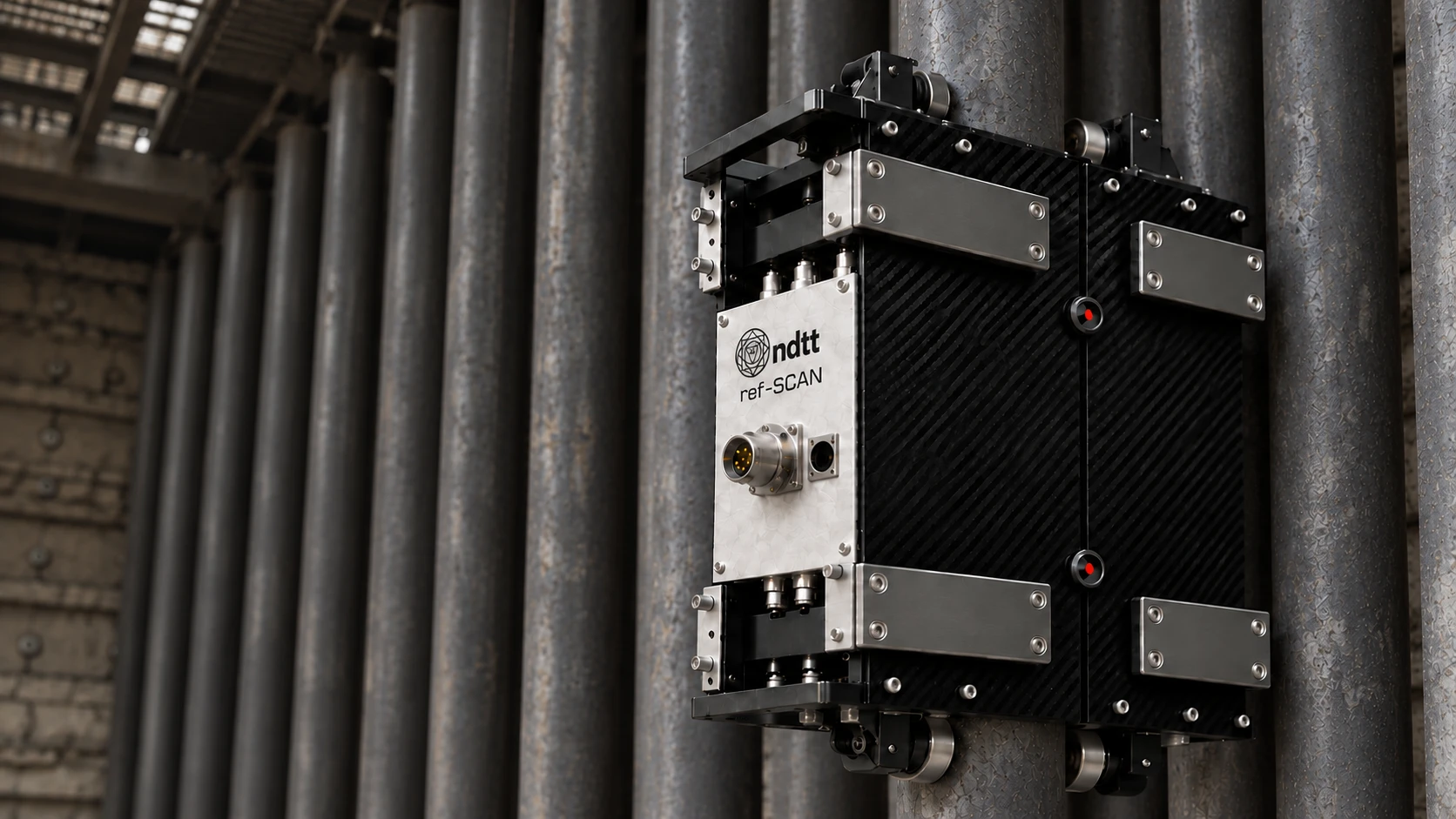
Integrated reformer intelligence
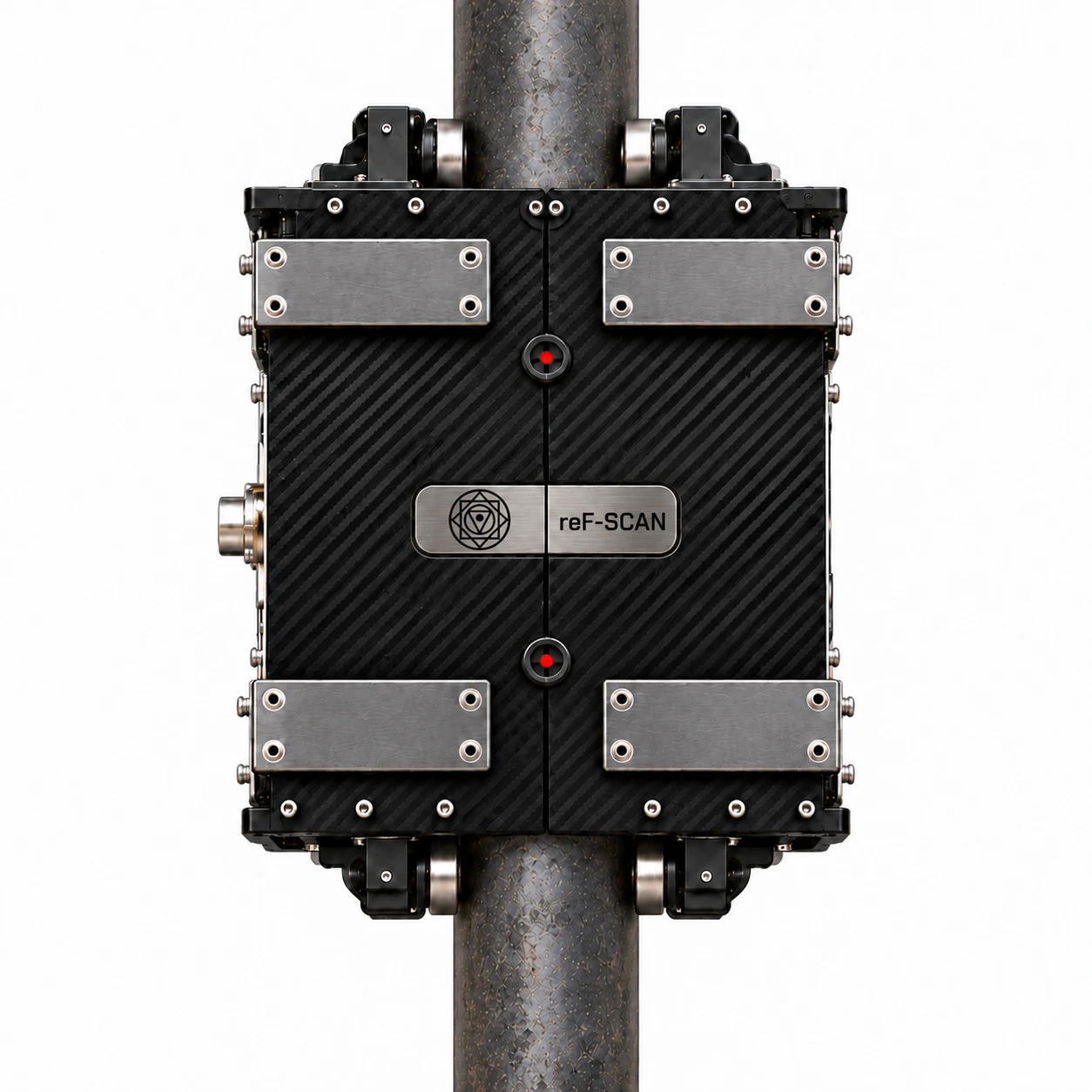
reF-SCAN is NDT Technologies’ indigenously developed robotic crawler for reformer tube inspection, combining TFET material response, 4-axis laser geometry, gyroscope bowing data and HD visual evidence.
Asset challenge
Creep, carburization, carbide precipitation, bulging, wall thinning, bowing and visible surface damage evolve together. A useful inspection therefore has to correlate material condition with dimensional and visual evidence rather than treat each measurement in isolation.
Inspection architecture
Select an evidence layer to see how it contributes to the inspection decision.
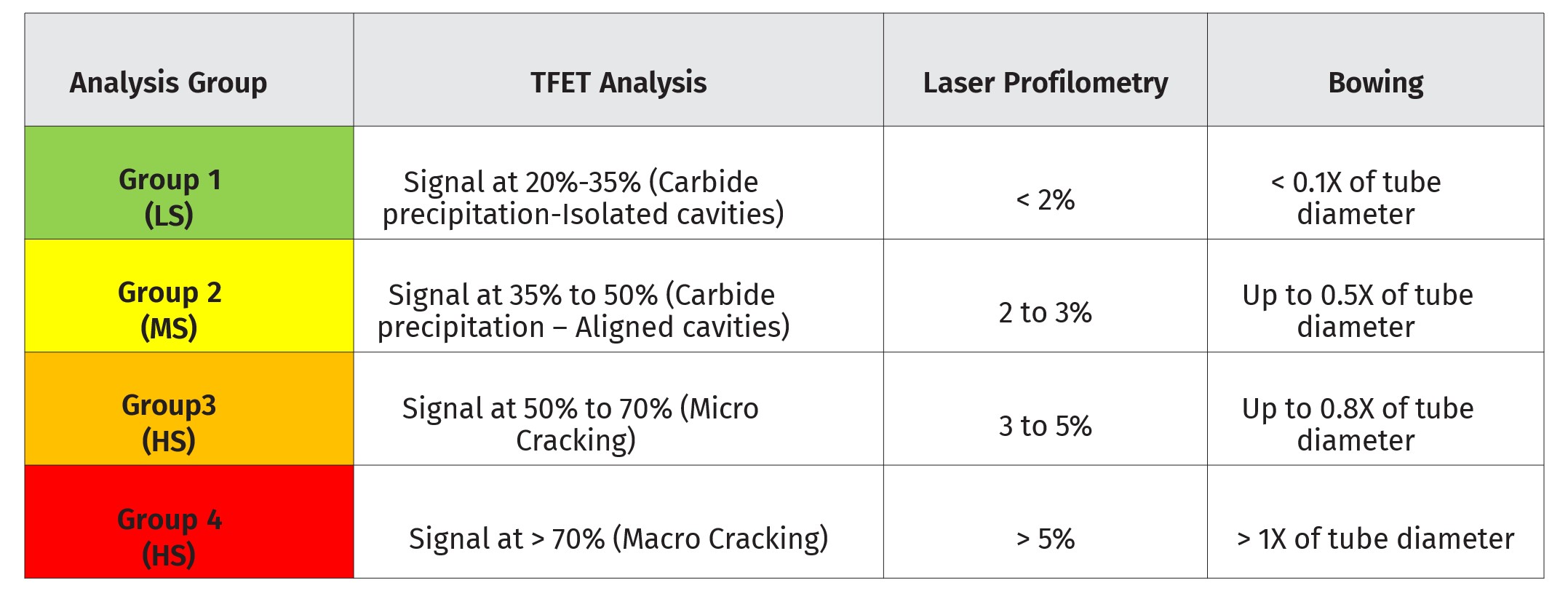
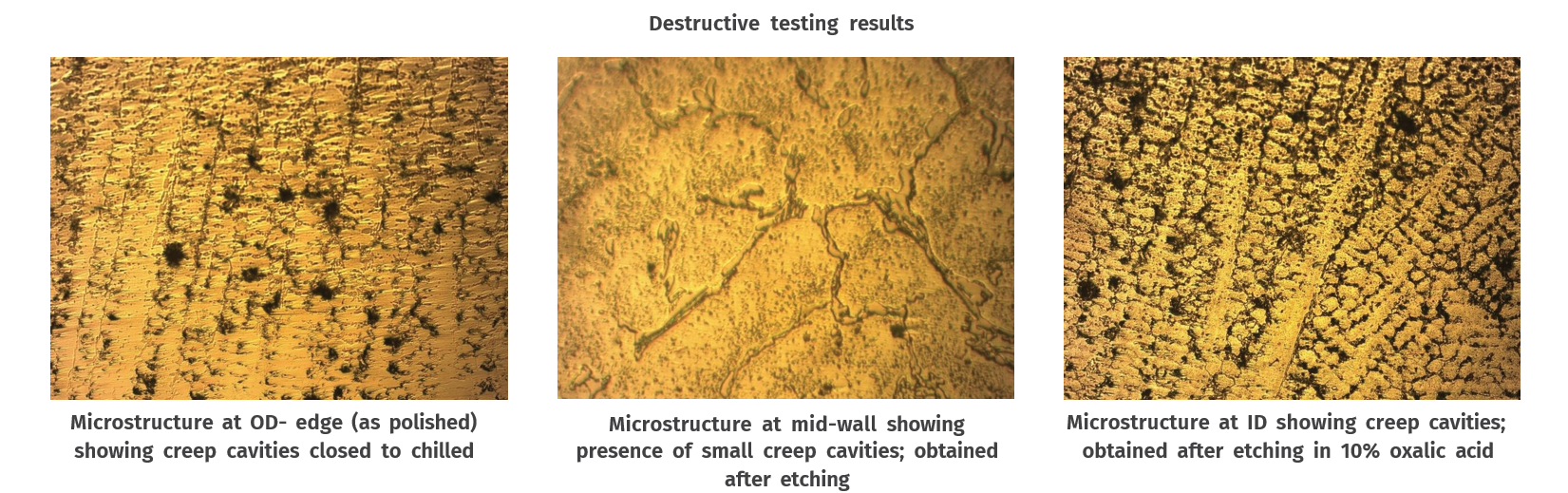
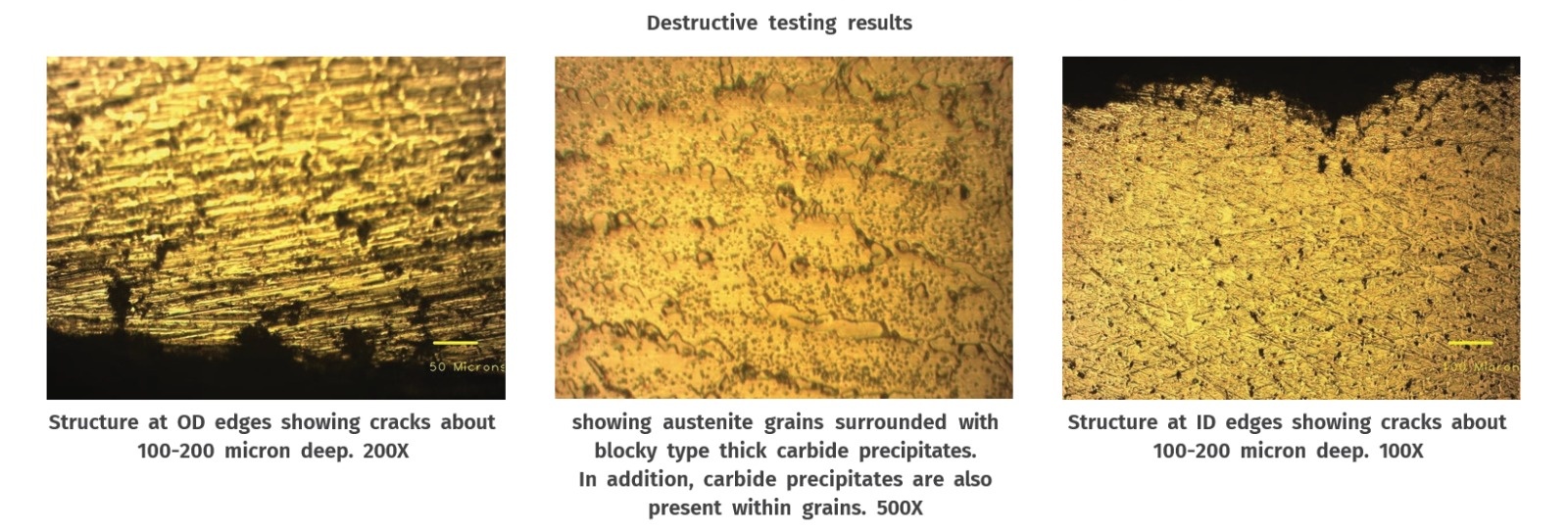
Transition Field Electromagnetic Technique is used to detect early creep- and carburization-related microstructural response, including carbide precipitation, before gross dimensional symptoms become the only evidence.
Coverage & decision
reF-SCAN data can be integrated with plant operating information in reF-Life to perform Remaining Life Assessment aligned with API 579-1/ASME FFS-1. The goal is a tube-by-tube engineering basis for maintenance, replacement and safe continued operation.
Field evidence
The imagery below is sourced from the original NDT Technologies service material and presented in a new evidence-led layout.
Engineering outcomes
The value is not the sensor alone—it is the quality, coverage and usability of the evidence it produces.
Identify subtle material transition before obvious macroscopic failure symptoms dominate the inspection.
Combine complementary techniques in a single robotic platform instead of independent inspection campaigns.
TFET reduces the traditional dependence on highly cleaned tube surfaces, improving repeatability and turnaround planning.
Correlate material, geometry and visual evidence to support maintenance prioritization and RLA decisions.